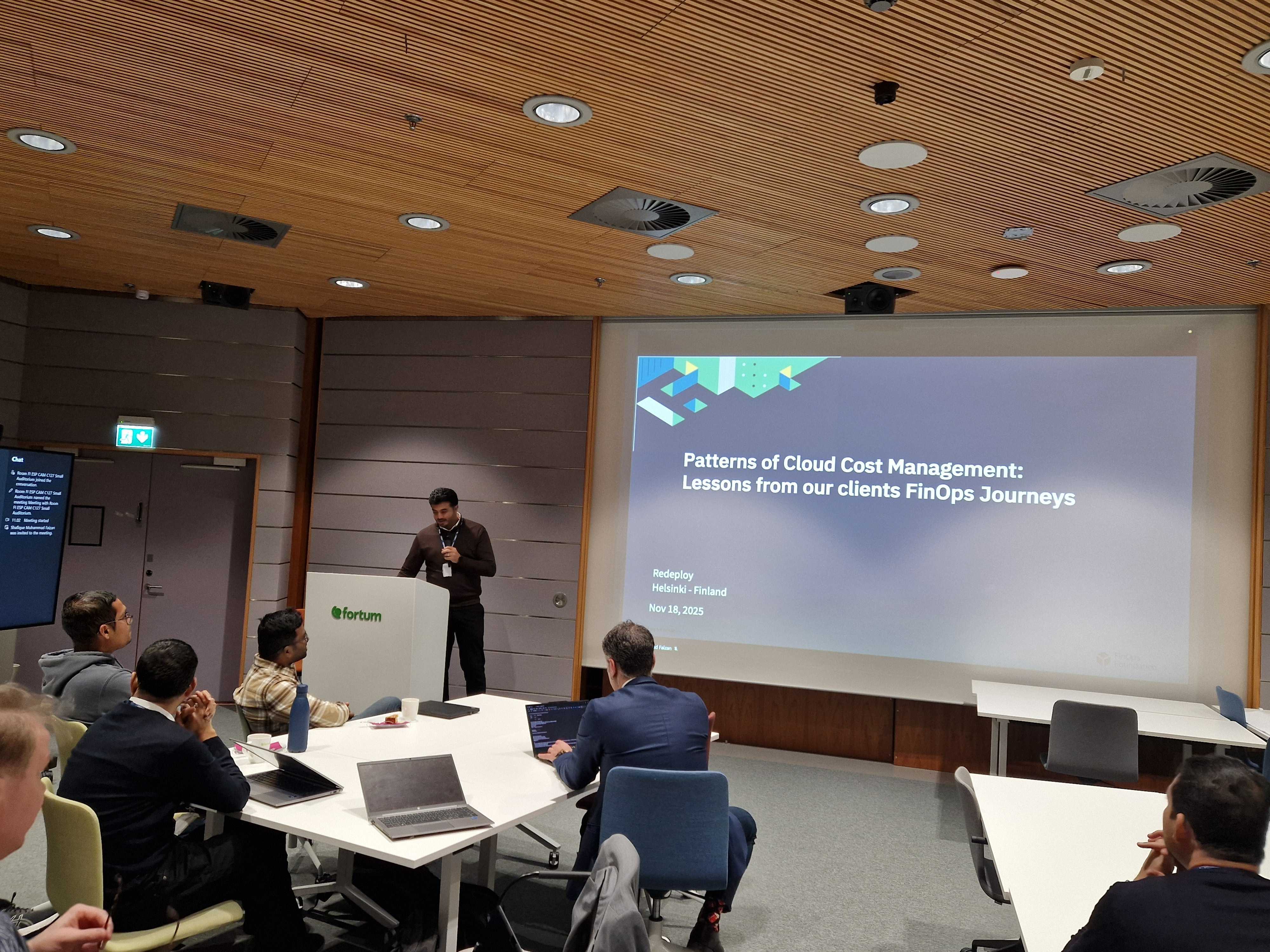
Patterns of Cloud Cost Mastery What High-Performing Teams Do Differently
At this year’s FinOps Nordics Meetup in Helsinki, I had the opportunity to share observations from years of working with Nordic organizations on their cloud financial management challenges. The conversation was centered not on tools or theory, but on the real patterns we see across teams the frustrations, the blockers, and the practices that consistently lead to success.
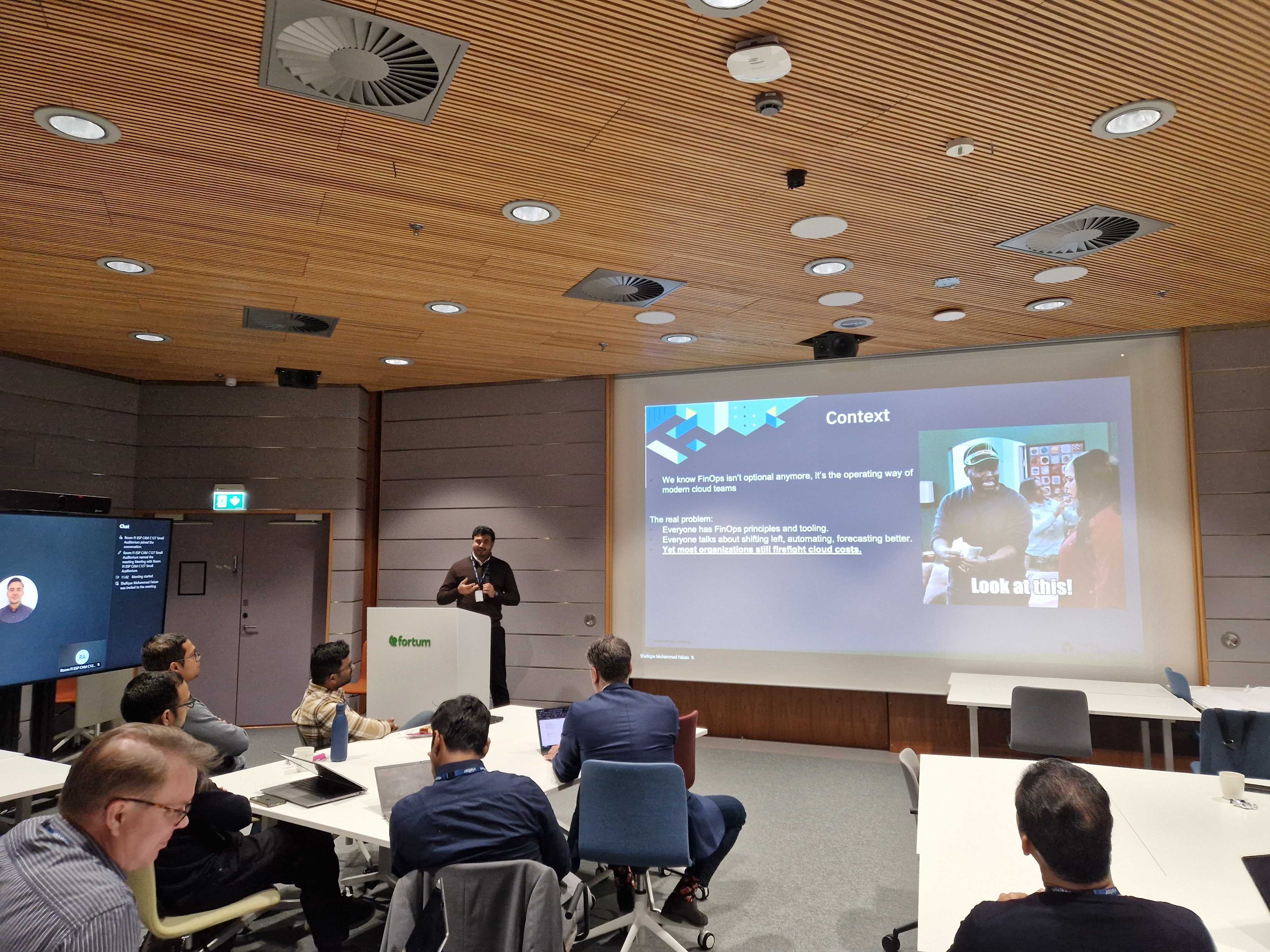
FinOps is no longer a niche discipline. It has become the operating system for modern cloud teams. Yet despite this shift, many companies still find themselves stuck in the same reactive cycle: unexpected bills, last-minute firefighting, and a sense that cloud costs are always just slightly out of control.
Why is that? And more importantly:
What are the teams who consistently succeed actually doing differently?
1. The Modern Cloud Reality: FinOps Isn’t Optional Anymore
Today, every organization believes they “do FinOps.”
They have dashboards. They have cost reports. They may have even bought a FinOps platform.
But the truth is more sobering:
Having FinOps tools is not the same as operating with FinOps discipline.
Cloud costs don’t spiral because of a lack of data.
They spiral because teams fail to turn that data into consistent, predictable operational behavior.
2. Why Maturity Doesn’t Naturally Improve: The Crawl–Walk–Run Myth
We often describe FinOps adoption as:
- Crawl: starting the journey
- Walk: establishing practices
- Run: automation and maturity
But what we actually see in the field is different:
- Teams think they’re “walking” because they have dashboards
- They think they’re “running” because they have automation
- Meanwhile, their foundational practices are still “crawling”
This optimism bias leads to blind spots and blind spots lead to cost surprises.
3. The Most Common Patterns Holding Teams Back
From working with dozens of organizations, three failure patterns repeat themselves more than any others.
Pattern 1: Visibility Gaps Where It Matters Most
Organizations often have some visibility, but not the right visibility.
Common issues:
- Tagging or metadata is incomplete, inconsistent, or unreliable
- Business context is missing (who owns what? why?)
- Costs are analyzed after they happen instead of before decisions are made
- Reporting exists, but no one trusts it enough to make decisions
The result:
Teams see numbers, but they don’t see meaning.
Pattern 2: Organizational Structures That Can’t Support FinOps
This is the silent killer.
Typical structures include:
- A single FinOps team “responsible” for cloud costs but with no authority
- Cost conversations happening too high in the hierarchy and passed downward
- Engineering asked to optimize costs without context, tools, or time
FinOps is fundamentally cross-functional. When ownership is unclear, everyone becomes responsible which means no one is accountable.
Pattern 3: Tooling Without Follow-Through
More tools does not equal more control.
Companies invest in cost tools expecting transformation, but experience:
- Dashboards no one logs into after month one
- Alerts that get muted or ignored
- Optimizations identified but never prioritized
- Automation pipelines built once but never maintained
Tools amplify good processes they cannot create them.
4. The Behaviors of High-Performing FinOps Teams
While every organization is different, top performers share strikingly similar behaviors.
1. They Implement Governance Without Creating Bureaucracy
Winning teams don’t slow developers with approvals, they embed guardrails inside the delivery process.
This includes:
- Budgets and limits built into services and environments
- Policies that prevent costly mistakes before they happen
- Clear ownership for each product or service
- Engineers empowered with real cost awareness
Good governance is invisible.
It prevents chaos without getting in the way.
2. They Think in Product-Level Unit Economics, Not Monthly Bills
Instead of asking:
“Why did our cloud bill increase this month?”
They ask:
- What is the cost per customer?
- What is the cost per request?
- What is the margin of this product line?
- Does customer usage scale profitably?
This shift turns cloud cost from a technical metric into a business performance indicator.
3. They Treat Optimization as a Continuous Practice
The highest-performing teams build optimization into their operational rhythm:
- Automated cleanup of waste
- Regular cost and architecture reviews
- A prioritized optimization backlog integrated into sprints
- Rightsizing as part of lifecycle management
- Storage and network tuning included in routine maintenance
Optimization isn’t a “special project.”
It’s simply how they run their platform.
5. The Real Takeaway: Success Comes From Culture, Not Tools
After years of seeing teams evolve through their cloud journeys, the conclusion is clear:
Cloud cost mastery isn’t about tools, dashboards, or even expertise it’s about habits, ownership, and culture.
Teams that control costs:
- Build visibility that people trust
- Align responsibilities with real authority
- Treat FinOps as an operational discipline, not a reporting exercise
- Create feedback loops that influence real-world decisions
And most importantly:
They make cloud cost everyone’s responsibility not just one team’s.
Final Thoughts
Sharing these insights in Helsinki was a reminder of how far the FinOps community has come and how much opportunity still lies ahead. The organizations that thrive will be those that combine financial accountability, engineering autonomy, and operational clarity.
If your team is on its own FinOps journey, remember:
You don’t need perfection.
You need consistency.
And consistency comes from building the right patterns one small improvement at a time.
You can also view the full presentation from the session here: Download Presentation